General Surgery in North Richland Hills
At Cornerstone Animal Hospital, our veterinarians serving North Richland Hills, Southlake, and Keller perform a comprehensive range of general surgical procedures for dogs, cats, and some exotic and pocket pets.
These procedures include, but are not limited to:
- Spaying and Neutering
- Tumor (mass) and growth removals
- Biopsies of skin, bone, and internal organs
- Oral surgeries for masses (tumors) and teeth
- Declawing cats and dewclaw removal in puppies
- Tail docking
- Limb amputation (in unsalvageable cases)
- Laceration and wound repair
- Urinary bladder surgery (cystotomy) and bladder or urethral stone removal (urethrotomy)
- Eye surgeries including eyelid repair for entropion and ectropion, and cherry eye correction
- Ear surgeries including hematoma repair, ear canal surgeries for chronic infections, and others
- Planned Cesarean sections
- Hernia repair
- Mammary gland removal (mastectomy)
- Prophylactic gastropexy (stomach tacking in large breed dogs to prevent twisted stomach), among others
For orthopedic procedures like ACL repair, fracture repair, or TPLO, visit our dedicated orthopedic surgery page. Pets needing dental extractions or oral mass removal are also supported by our dental services and dental x-ray diagnostics.
Emergency Surgery
We also perform emergency surgical procedures, including:
- Foreign body removal
- Abdominal exploratory surgery (for suspected foreign bodies or tumors)
- Cesarean section
- Pyometra (uterine infection) surgery
- Splenectomy (spleen removal for tumors or other conditions)
- Gastric dilation and volvulus (GDV or twisted stomach) surgery
- Perineal urethrostomy (PU) for blocked male cats
- Tracheostomy
- Laceration repair
- Eyeball repair or removal (for prolapsed eyes)
- Other emergency surgical procedures
Learn more about how we handle urgent cases on our emergency care page.
Anesthesia
At Cornerstone Animal Hospital, we prioritize the safety of your beloved pets just as your family doctor does for you. We tailor anesthetic protocols to each patient’s species (from large dogs to pocket pets), age (young to senior), and health conditions (healthy or with heart, liver, or kidney concerns). Our use of modern anesthetic medications ensures a safe and comfortable experience for all patients.
Anesthesia Monitoring
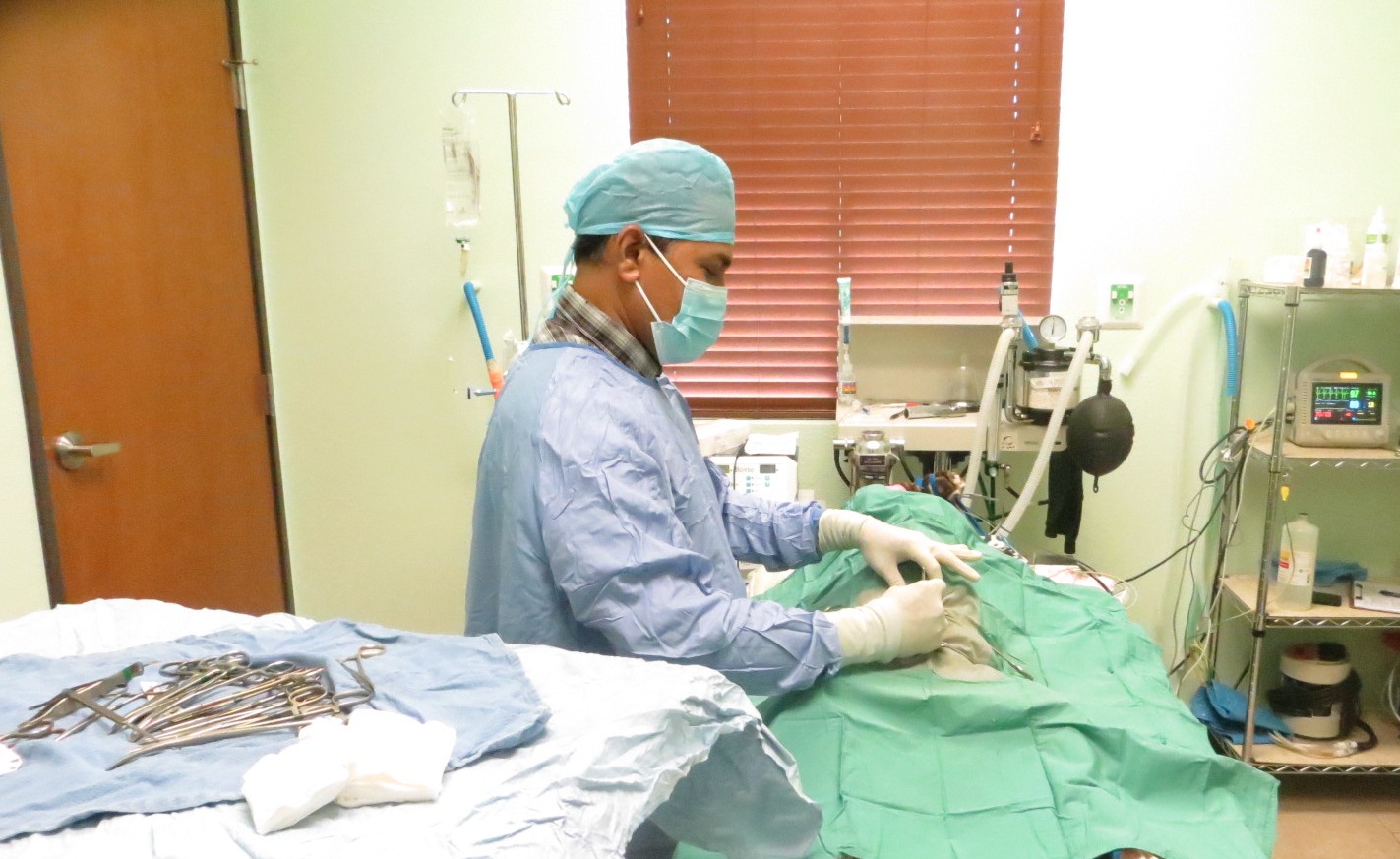
Our experienced staff use advanced digital monitoring equipment to continuously track heart rate, respiration, oxygen saturation, blood pressure, body temperature, and other vital signs throughout the procedure. Placement of an intravenous (IV) catheter and administration of IV fluids are standard for any major anesthesia. While anesthesia carries some risk, the benefits generally outweigh these when procedures are necessary.
All patients receive an IV catheter for fluid administration during anesthesia to maintain hydration. Our clinic is equipped with state-of-the-art monitoring devices including pulse oximetry (heart rate and oxygen saturation), electrocardiography (heart rhythm), respiratory monitoring, temperature, and blood pressure. This vigilant monitoring helps ensure your pet’s safety throughout anesthesia.
Does My Pet Need Pre-Anesthetic Blood Work?
We strongly recommend pre-anesthetic blood tests for all patients to assess organ function, clotting ability, and blood cell counts through our on-site laboratory services. Combined with a physical exam, this testing helps us evaluate anesthetic and surgical risks. Many conditions that could affect anesthesia safety may not show up on physical exam alone but can be detected through blood work.
Pain Management
We understand that surgery can cause pain, so we use advanced pain management protocols with medications before and after procedures to keep your pet comfortable. Many pets also benefit from laser therapy to support healing after surgery. We also provide loving care, including phone updates for pet parents, cozy blankets, and lots of attention to make the experience as gentle as possible, with recovery monitored in our hospitalization and patient care unit as needed.
For more information about pet surgery, please don’t hesitate to contact us today at (817) 514-8387.
What types of surgery do you perform?
We perform a wide range of procedures including spaying and neutering, tumor removal, biopsies, oral surgery, laceration repair, and orthopedic surgery.
Is anesthesia safe for my pet?
Yes, we tailor anesthetic protocols to each pet’s species, age, and health, and use advanced monitoring equipment throughout every procedure.
Does my pet need blood work before surgery?
Yes, we strongly recommend pre-anesthetic blood testing to assess organ function and catch any issues that might affect anesthesia safety.
How is my pet monitored during surgery?
We use digital monitoring equipment to track heart rate, oxygen levels, blood pressure, temperature, and other vital signs continuously throughout the procedure.
Will my pet be in pain after surgery?
We use pain management protocols before and after surgery, along with options like laser therapy, to keep your pet as comfortable as possible during recovery.
Do you perform emergency surgery?
Yes, we’re equipped to handle emergency surgical procedures such as foreign body removal, GDV surgery, and wound repair.
How will I be updated during my pet’s procedure?
Our team provides phone updates so you know how your pet is doing before, during, and after their procedure.