
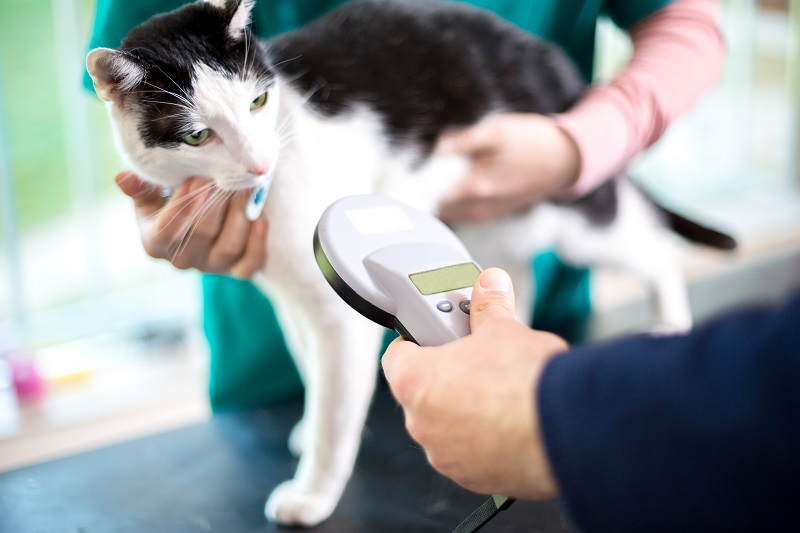
Microchip Implantation in North Richland Hills
At Cornerstone Animal Hospital, we highly recommend microchip implantation for all pets as a safe and permanent form of identification. This simple procedure places a small microchip under your pet’s skin, providing a reliable way to reunite lost pets with their families.
Request an AppointmentCollars and tags can fall off, become unreadable, or be removed, but a microchip provides a permanent form of identification that stays with your pet for life. Our clinic uses microchips that include lifetime registration at no additional cost, ensuring your pet’s information is always accessible when needed.
How Microchipping Works
A microchip is about the size of a grain of rice and is implanted just beneath the skin between your pet’s shoulder blades using a simple injection. The procedure is quick, causes minimal discomfort, and doesn’t require anesthesia in most cases. Many pet parents choose to have their pet microchipped during a routine preventive care visit, at the time of vaccinations, or while their pet is already under anesthesia for another procedure, such as spay or neuter surgery.
Why Microchipping Matters
Studies show that microchipped pets are far more likely to be reunited with their owners if lost compared to pets without one. Once implanted, the microchip can be scanned by any veterinary clinic, animal shelter, or animal control officer using a universal scanner, instantly pulling up your contact information from the registry.
Registering and Updating Your Information
A microchip is only effective if the registration information is current. After your pet is microchipped, we’ll help make sure their chip is registered with your correct contact details. If you move or change your phone number, it’s important to update your pet’s microchip registry right away so you can be reached quickly if your pet is ever found.
Is Microchipping Safe?
Microchipping is a very safe, low-risk procedure that has been performed on millions of pets. The chip itself does not require batteries or maintenance and is designed to last the lifetime of your pet.
For more details about pet microchipping, please don’t hesitate to contact us at (817) 514-8387.
Does microchipping hurt my pet?
The procedure causes only brief, minor discomfort, similar to a routine injection, and most pets tolerate it well without sedation.
How long does a microchip last?
A microchip is designed to last the lifetime of your pet and does not require batteries or replacement.
Can a microchip be used to track my pet’s location?
No, a microchip is not a GPS device. It stores an ID number that’s linked to your contact information in a registry, which is read using a scanner.
What happens if I move or change my phone number?
You’ll need to update your pet’s microchip registration with your new information so shelters and clinics can reach you if your pet is found.
Can my pet be microchipped during another procedure?
Yes, many pet parents choose to microchip their pet during a spay, neuter, or dental procedure while they’re already under anesthesia.
Does microchipping replace a collar and ID tag?
No, a collar and tag are still helpful for quick identification, but a microchip provides permanent backup identification that can’t fall off or be removed.
Is there a cost for microchip registration?
Our clinic uses microchips that include lifetime registration at no additional cost.